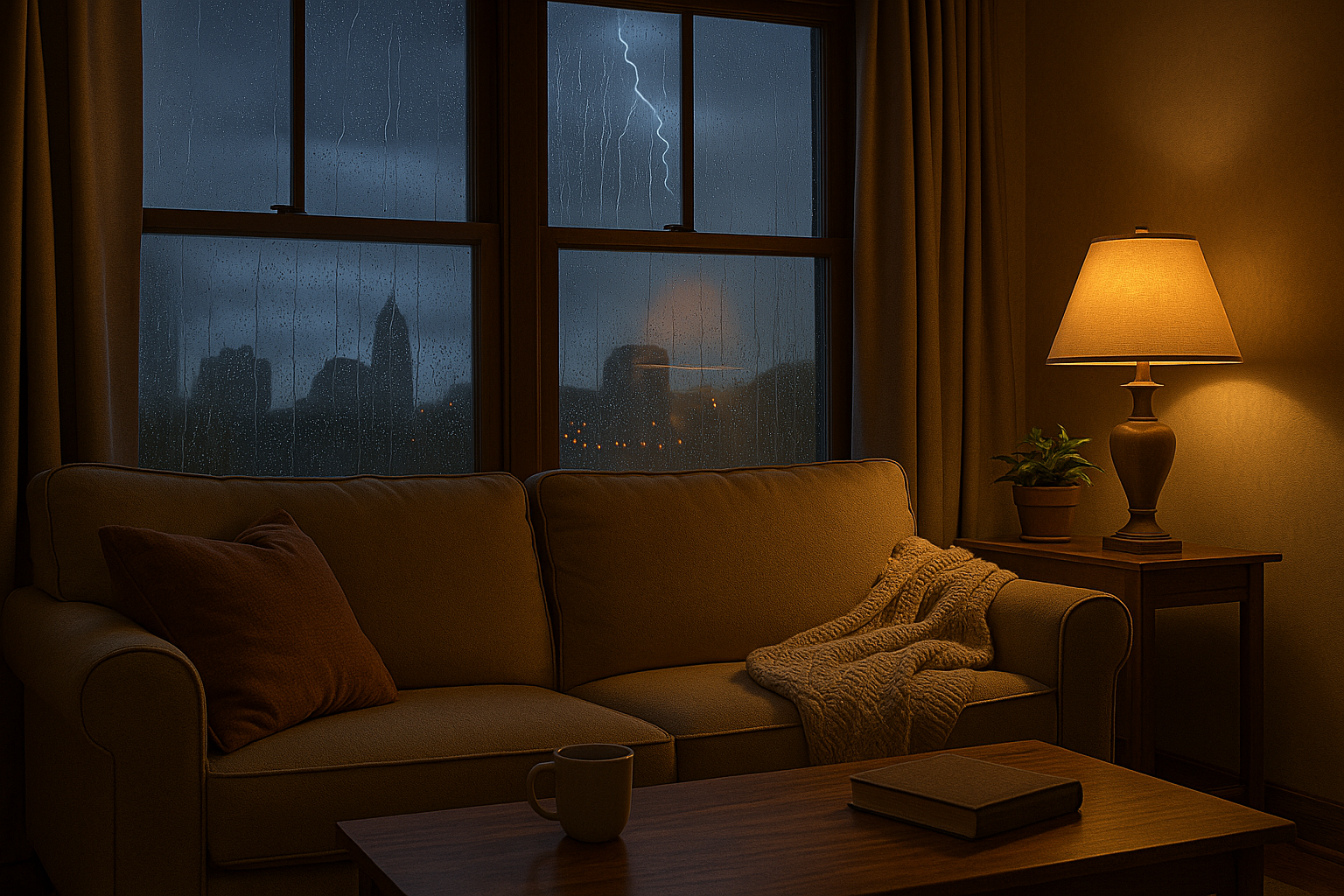
The storm rolled in faster than expected. By the time I looked up from the sink, thunder cracked so loud it rattled the kitchen windows. My youngest yelled from the living room, “Is it going to hit us?” The lights flickered, the sirens wailed faintly in the distance, and for a moment, I felt that same childhood panic I thought I’d outgrown. But then I remembered — fear isn’t something we outgrow. It’s something we learn to manage, and our kids are learning that from us.
How the Storm Started a Conversation
I gathered everyone in the hallway, handed out flashlights, and tried to keep my voice steady. My oldest asked, “Why are sirens scary if they’re supposed to help us?” That question — simple, honest — hit deeper than I expected. Fear, I realized, isn’t always about danger. Sometimes it’s about not knowing what happens next. So, we talked about what storms do, how warning systems keep us safe, and how fear can be useful if we listen to it instead of letting it control us.
What That Night Taught Me About Helping Kids Handle Fear
- 1. Name the fear before it grows. Kids don’t need perfect answers — they need words to match their feelings. When you name what’s scary, you shrink its size.
- 2. Explain, don’t dismiss. “You’re fine” doesn’t calm a child. Understanding does. A short, simple explanation (“Thunder is loud but far away”) builds trust faster than reassurance alone.
- 3. Model calm — even when you fake it. Children borrow their parents’ tone. If they see you breathe through it, they’ll learn to breathe through it too.
- 4. Turn the fear into participation. Let them hold the flashlight, close the curtains, or count between thunder and lightning. Action replaces helplessness.
When the Lights Came Back
After the storm passed, we sat on the porch and watched the rain ease into a drizzle. My youngest whispered, “It’s not so bad when you know what it is.” And that’s the moment I realized — our job isn’t to eliminate fear for our kids. It’s to teach them what to do with it. That night, the storm became less about weather and more about learning how to stay grounded when everything outside feels uncertain.
For parents wanting more tools to support kids through anxiety, this resource from Child Mind Institute explains practical ways to turn fear into confidence.
Takeaway
That Cincinnati thunderstorm reminded me that courage isn’t the absence of fear — it’s what happens when we face it together. Sometimes, the most powerful thing we can say as parents isn’t “Don’t be afraid.” It’s “I get scared too, but we’ll be okay.”
This story is inspired by real life but is a work of fiction. Any resemblance to actual persons or events is coincidental.
Read more Cincy Life Stories or explore local things to do in Cincinnati for family inspiration beyond the storm.